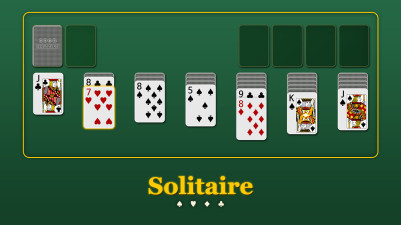
About Amazing Spider Solitaire
The moment arrives when the last face-down card in a column flips, and the question is not which tableau pile to pull from but whether the deck's single draw will deliver the rank you need. Spider Solitaire hinges on that one-step decision: commit to a partial run now or hold out for the perfect sequence. Each deal across the one-, two-, or four-suit difficulties is solvable, so the puzzle is never whether a solution exists—only whether you read the tableau's bottleneck correctly. The satisfaction comes not from luck but from the exact move you choose to make.
There’s something so satisfying about stacking cards in the right order and watching them disappear. Spider Solitaire gives you that perfect puzzle fix with three difficulty levels—one, two, or four suits—and every deal is solvable. It’s all about planning your moves, clearing columns, and using the deck wisely. Free, no frills, just pure sorting strategy that keeps your brain clicking.
How to Play Amazing Spider Solitaire
- Arrange cards on the tableau in descending order (from King to Ace) of the same suit to form a complete sequence.
- Tap and drag a card or a contiguous run of same-suit cards to another tableau column where the bottom card is one rank higher.
- When a complete King-to-Ace run of the same suit has been assembled, it is automatically removed from the board.
- Flip over any face-down card that becomes exposed by moving the card(s) on top of it.
- Tap the stock deck at the bottom-right to deal one new card onto each of the ten tableau columns when no further moves are possible on the tableau.
Tips & Strategies
- Try to clear entire columns of face-down cards before drawing from the deck, as each empty column lets you park a partial run temporarily.
- Build runs in the same suit whenever possible, even if it means breaking a longer unsorted run, to increase the chance of forming a complete King-to-Ace sequence.
- Use empty columns strategically to hold a King or a long run, freeing up other columns to reorder cards.
- In two-suit and four-suit games, prioritize moving cards that block the most face-down cards, as flipping them opens more moves.
Frequently Asked Questions
What happens when I complete a King-to-Ace run?
The entire sequence is automatically removed from the tableau and placed in the foundation area at the bottom-left, reducing the total cards on the board.
Can I move a run that contains cards of different suits?
Only contiguous runs of the same suit can be moved as a group. If a run has mixed suits, you must move the top card one at a time.
Why would I choose one suit over four suits?
One suit removes the suit-matching constraint, making it easier to build and move runs, while four suits require careful sorting since only same-suit runs can be moved together.
What does the deck draw do?
Tapping the stock deck deals one card face-up onto each of the ten tableau columns, adding new cards to work with but also potentially filling empty columns.
Is there a penalty for drawing from the deck too early?
Drawing early may fill columns that could have been used to rearrange existing cards, making it harder to complete runs, but there is no score penalty or undo limit specified.
Category & Tags
Game Details
- Category: Color Sort, Number & Letter Sort
- Last updated: May 6, 2026