About Solitaire Shuffle
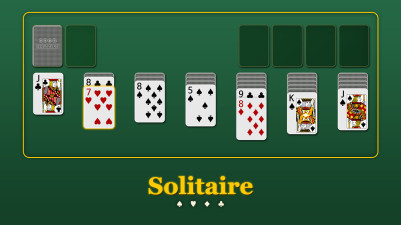
Most card-sort games let you stack cards by rank alone, but Solitaire Shuffle demands alternating colors as you build down from King to Ace in the columns. Only then can you move a completed sequence to the suit-specific rows above. This dual constraint — sorting by both color and suit — turns every drag into a layered decision: one wrong color break and your cascade stalls. The limited-move counter adds another twist, forcing you to rethink whether a three-card draw or one-card draw better serves your pace. Clearing the board here isn't just about stacking; it's about threading the needle between color rules and move economy.
Solitaire Shuffle puts a fresh spin on the classic card sorting puzzle. Your goal is to organize all the cards by suit from Ace to King. Strategically sort the columns in alternating colors, then move completed sequences to the top rows. With a limited number of moves, each decision counts. Choose between three-card or one-card draw styles to suit your pace. There’s a real satisfaction in clearing the board through clever planning and tidy organization.
How to Play Solitaire Shuffle
- Drag cards to columns on the playing field, stacking them in descending order (King to Ace) while alternating red and black colors.
- Move completed sequences (full King-to-Ace runs of a single suit) to the rows at the top, where cards must be added in ascending order (Ace to King) by suit.
- Choose between drawing one card or three cards from the stock to give yourself more options.
- Use empty columns as temporary holding spaces — you can place any card or partial sequence there as long as it follows the alternating-color rule.
Game Features
- Alternating-color stacking rule forces careful planning on every drag.
- Dual play area — columns for building sequences, top rows for final suit sorting.
- Three-card and one-card draw modes let you adjust difficulty and pace.
- Limited moves add pressure to optimize each decision.
- Classic card ranks (Ace through King) with standard suit symbols keep the familiar Solitaire feel.
Tips & Strategies
- Focus on revealing face-down cards in columns early — they open up more moves than chasing top-row progress.
- When using three-card draw, prioritize moves that use the third card, as cycling through the stock is slower.
- Reserve empty columns for long alternating runs, not single cards — you'll need the space later.
Frequently Asked Questions
What happens if I put a card in the wrong suit row?
Cards in the top rows must be added in ascending order within the same suit. If you place a card that doesn't belong, you can drag it back to the playing field as long as it wasn't already covered.
Can I move a partial sequence from one column to another?
Yes, you can drag a partial sequence (e.g., King-Queen-Jack of alternating colors) to another column, provided the destination column's top card is one rank higher and the opposite color.
What does the 'three-card draw' vs 'one-card draw' change?
In three-card draw, clicking the stock reveals three cards at once but you can only play the top one; in one-card draw, you see one card at a time but can cycle through more quickly.
Is there a penalty for using an empty column incorrectly?
No penalty, but placing a card or sequence in an empty column is a strategic choice — you cannot move it elsewhere unless the new column's rules are satisfied.
Category & Tags
Game Details
- Category: Color Sort, Number & Letter Sort
- Last updated: April 16, 2026