About Daily Solitaire
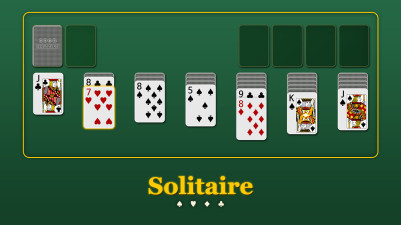
In Daily Solitaire, colour functions as a data channel before the rule even speaks. The four suits—hearts, diamonds, clubs, spades—are colour-coded red and black, instantly partitioning the deck into two visual groups. This hue-based split communicates a matching constraint: alternating colours are required when building tableau columns, not just any descending sequence. The colour scheme trains the eye to see legal moves before the brain processes rank, making each drag-and-drop decision a test of pattern recognition as much as planning.
Daily Solitaire is your perfect, classic brain-teaser. The goal is simple but satisfying: sort the deck by suit, building each pile from Ace to King. It’s a strategic puzzle where every move counts, creating that addictive feeling of slowly bringing order from chaos. A great way to unwind and give your mind a focused, rewarding challenge.
How to Play Daily Solitaire
- Deal the tableau with seven columns, the first column having one card face-up and six face-down, increasing by one card per column.
- Build tableau columns in descending order (King to Ace) while alternating red and black suits.
- Drag a sequence of cards that follows the alternating colour and descending rank rule from one tableau column to another.
- When a face-down card becomes the top of a column, click to flip it face-up.
- Move an Ace to one of the four foundation piles above the tableau, then build each foundation in ascending order (Ace to King) by suit.
Game Features
- Colour-coded suits (red hearts/diamonds, black clubs/spades) enforce the alternating-colour rule during tableau building.
- Four foundation piles accept cards solely by matching suit, requiring colour-pure sequences from Ace to King.
- Face-down cards in the tableau reveal their colour identity only when the covering cards are cleared.
- Stock pile provides additional cards drawn one at a time, each card's colour and suit immediately readable for placement decisions.
Tips & Strategies
- Prioritize revealing face-down cards in longer tableau columns, as their colour can unlock new alternating sequences.
- When moving a sequence, note that only the top card's colour matters for the alternating rule—the rest must follow the same colour pattern.
- Use empty tableau columns as temporary holding zones, but remember that they can only start with a King (any colour).
Frequently Asked Questions
What happens if I place a card of the same colour on a tableau column?
The move is invalid—tableau columns require alternating red and black suits, regardless of rank. The card will snap back to its original position.
Can I move a partial sequence of cards, or must I move the entire exposed stack?
You can move any valid sub-sequence from the top of a column, as long as the cards follow descending rank and alternating colours from top to bottom.
Why can't I place a red 5 on a red 6 in the tableau?
The alternating-colour rule forbids placing a card of the same colour on another. You must place a black 5 on a red 6, or vice versa.
Do the foundation piles require cards to be placed in exact suit order, or can I mix suits?
Each foundation pile accepts only one suit. You must place all hearts in one pile, diamonds in another, etc., in ascending rank from Ace to King.
Category & Tags
Game Details
- Category: Color Sort, Number & Letter Sort
- Last updated: April 16, 2026